


Ranch Montané Apiary
Partner of

Bee removal in Santa Clarita, Ca 91350
Live Bee Removal in Santa Clarita Roof Bee Removal Specialists
Licensed & Insured Bee Removal Humane Live Relocation Same-Day Service
Text or call : 661 367 1107📷 Text Photos for a Preliminary Assessment


Bee removal in Santa Clarita
Bees Relocation Experts
Why We Don't Remove Bees for Free
We are often asked if we can remove bees for free because we are beekeepers and want to save the bees. While we are passionate about protecting honey bees, bee removal is a specialized service that requires time, equipment, expertise, insurance, transportation, and often repairs to structures where the bees are living.
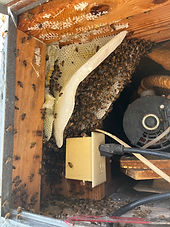
A proper live bee removal can take several hours and may involve opening walls, roofs, chimneys, or other parts of a building. Simply removing the visible bees is not enough—the honeycomb, honey, brood, and scent must also be removed to prevent future infestations and damage.
Our fees cover the labor, specialized equipment, safe relocation of the colony, and the ongoing costs of maintaining the bees after removal. By hiring a professional bee removal service, you are helping ensure that the bees are saved and relocated properly while protecting your property from future problems.
Thank you for understanding and for supporting responsible bee conservation.
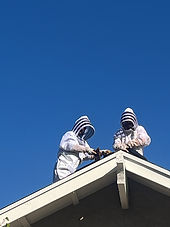
We are specialized in roof removal with a team of professionals roofer licensed and bonded

Text or call : 661 367 1107📷 Text Photos for a Preliminary Assessment


Africanized Bees
An established colony of Africanized bees (AHB’s) can be unpredictable. They will be defensive because their home is nearby. The reason they have been called “Killer Bees” is because many unfortunate incidents happened since they first entered the country. This is because they are much more defensive than their European relatives. They are more easily agitated; more of them will join the fight to defend their nest, and they will also pursue a predator longer and farther. They are simply more temperamental, but are not outwardly aggressive without provocation. These traits are genetically inherited and as such AHB’s are not good for beekeeping in urban areas. Remember, these traits have been developed and passed down over thousands of years from their ancestors that had to survive other predators and environmental factors in Africa.